I've spent 25 years looking at skin up close. The best-aging skin I see isn't wrinkle-free.
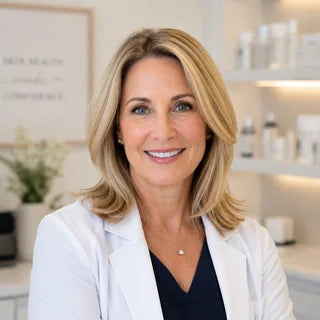
Kate McKinley received no compensation from Ethos Labs for this article and holds no financial interest in the company.
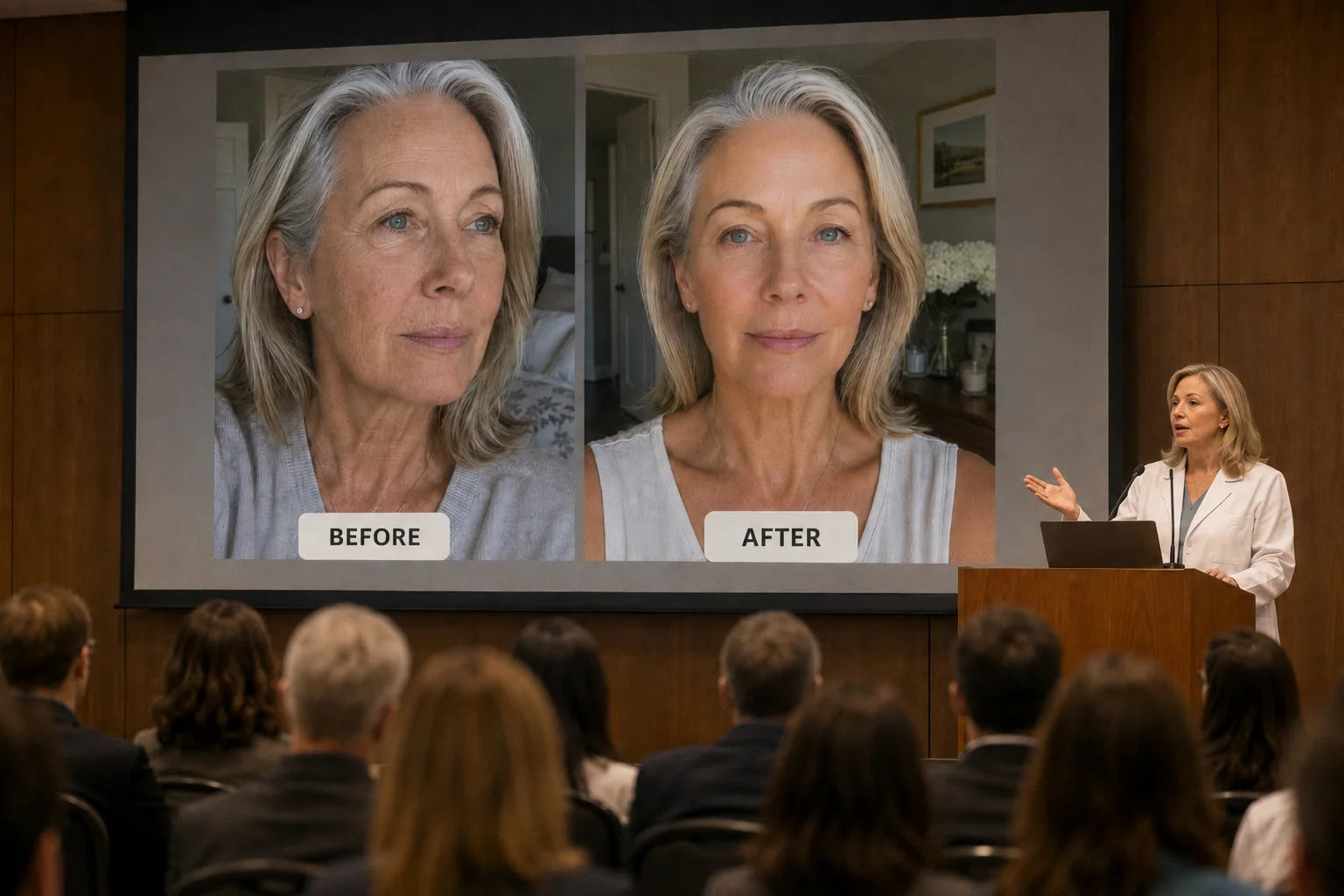
A patient sat down in my chair last spring and said something I've heard hundreds of times.
"I think I'm allergic to anti-aging."
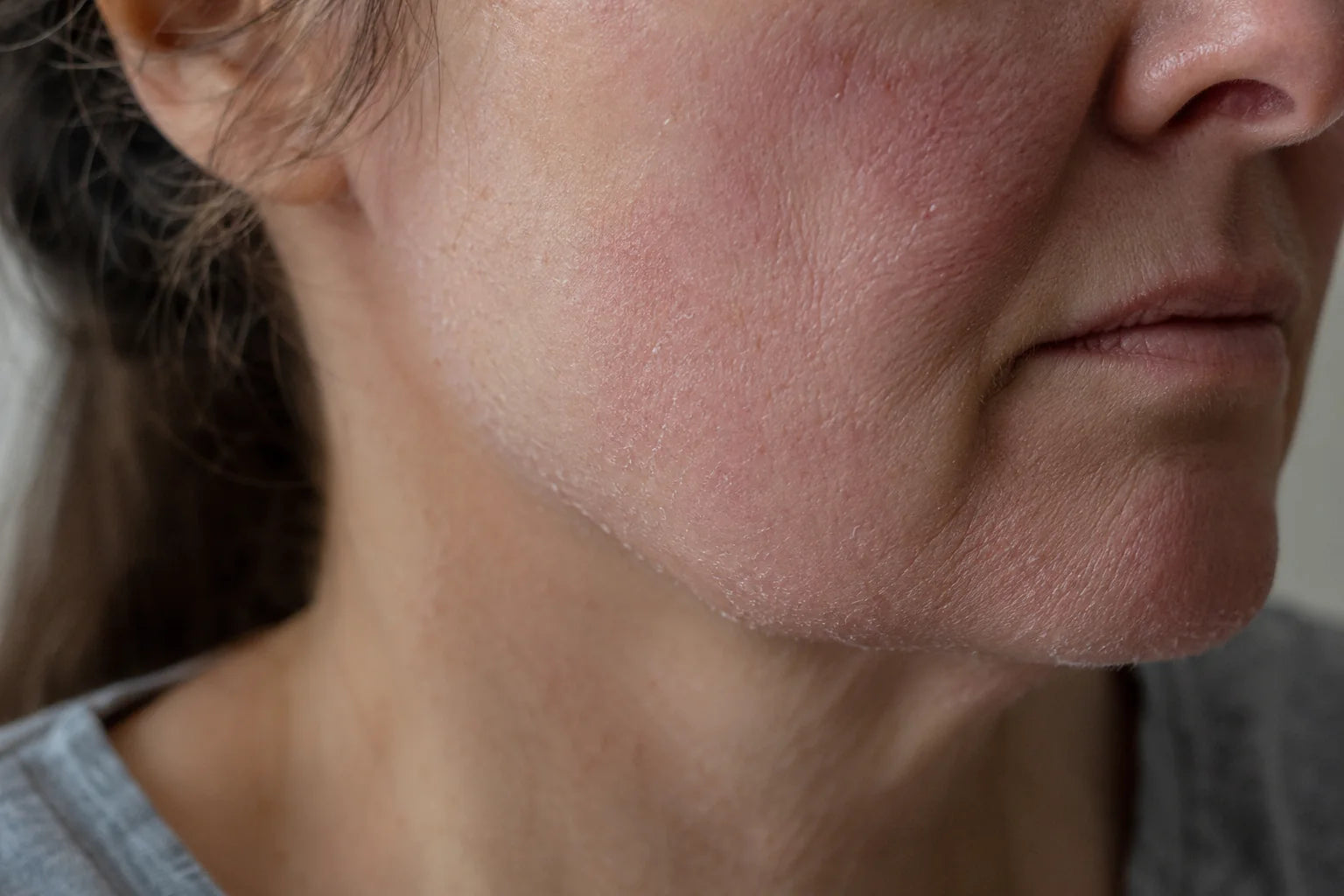
She wasn't. She'd been handed a retinoid, then an acid, then a stronger retinoid. Her skin was red, tight, and flaking along the jaw. She'd stopped wearing makeup because it wouldn't sit right.
She was doing everything the industry told her to do. And her skin looked worse than when she started.
I've been thinking about that appointment ever since, because she is not the exception. She is the pattern.
Here is the part that stayed with me.
She is not unusual. She is the majority.
Somewhere between a third and a half of the women who sit in my chair have quit at least one anti-aging product because their skin could not take it. They rarely volunteer this. It comes out sideways, usually when I ask what they tried before.
And almost every one of them assumes the failure was hers.
You know the feeling even if it hasn't happened to you in a treatment room.
You run into someone you haven't seen in five years, and her skin looks better than yours. Not younger exactly. Calmer. Smoother in a way that doesn't look done.
And on the drive home you ask the question every woman over fifty asks eventually.
What is she doing that I'm not?
For most of my career I assumed the answer would turn out to be money. A laser she could afford. A dermatologist on speed dial. Something out of reach.
It almost never is.
My name is Kate McKinley. I'm a nurse practitioner with a doctorate in nursing practice, and I've worked in skincare and medical aesthetics for 25 years.
For the last 15 of those I've owned McKinley Aesthetics, a small practice in Franklin, Tennessee.
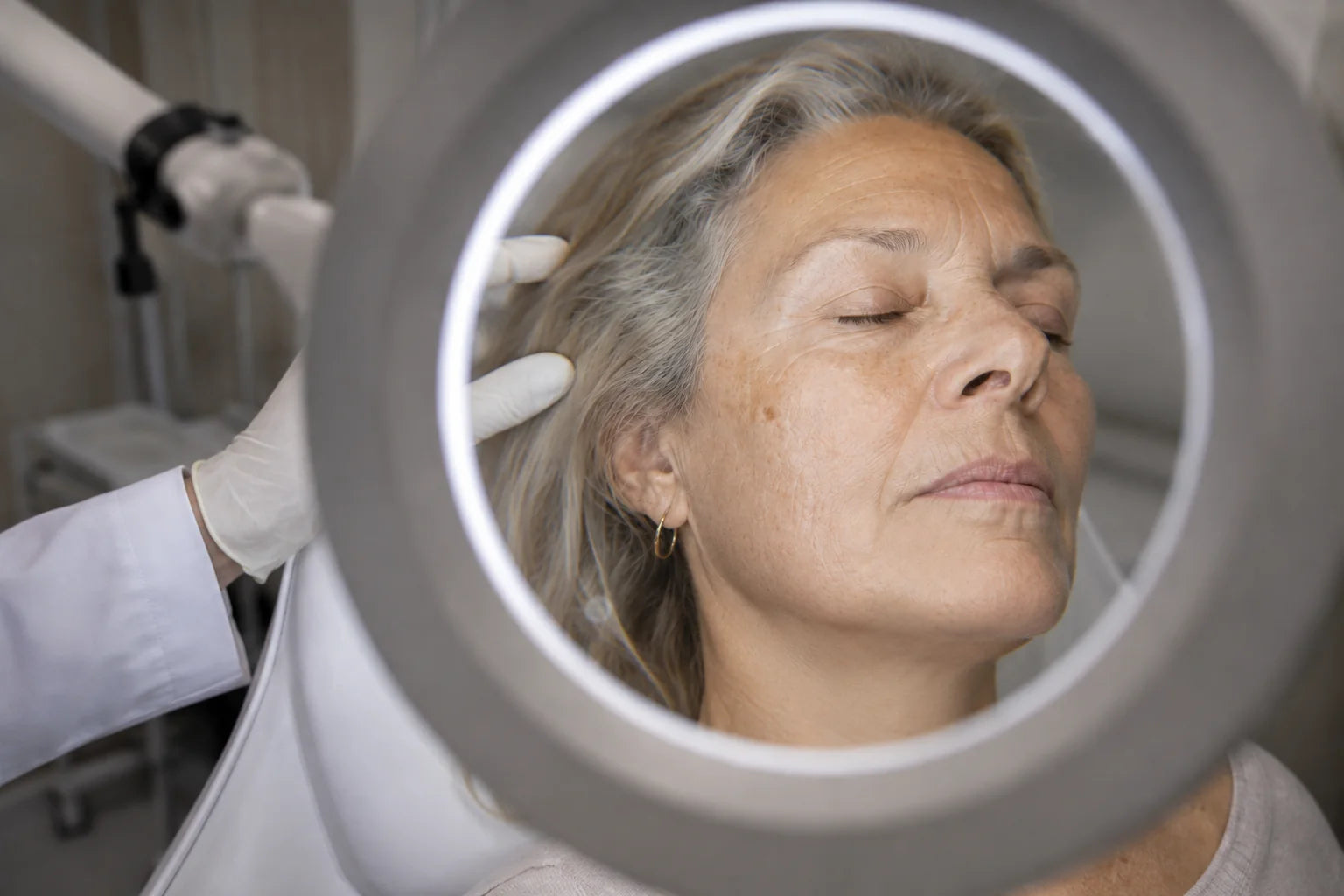
I've sat across from thousands of women and looked at their skin under a lamp that shows everything. Every sun freckle. Every place the barrier has given out.
And somewhere in the second decade of doing that, I changed my mind about what I was looking for.
What Thousands of Faces Actually Taught Me
When I started, I was trained to hunt for wrinkles. Find the line, treat the line.
That's still how most of the industry thinks. It's certainly how most products are sold.
But after enough years you start noticing which patients age well and which don't. And it stops matching what's written on the bottles.
The women whose skin held up best over ten and fifteen years were almost never the ones with the most aggressive routines.
Several of them had the least aggressive routines I'd seen.
I want to be specific about what I mean, because "ages well" is the kind of phrase that means nothing.
I am not talking about women with no lines. Every woman I see at sixty has lines, including the ones with beautiful skin. That is not the variable.
The variable is what the skin does under pressure. Whether it flushes and stays flushed. Whether it recovers from a hard winter or a bad week of sleep. Whether the barrier is holding or quietly failing.
Under a magnifying lamp those things are obvious in about four seconds, and they track almost perfectly with how a woman's face will look in another decade.
The best-aging skin I see isn't wrinkle-free. It's calm, hydrated, resilient, and consistently supported. Those four things, year after year. Kate McKinley, DNP
That's an unglamorous answer. Nobody builds a campaign around "calm."
But it's what I actually see. Skin that's been irritated for years looks irritated. Skin that's been supported for years looks supported. It shows up in the texture, the tone, the way it holds light.
And the single thing that gets in the way, more than anything else, is that a great many women simply cannot tolerate what they've been told to use.
The Ingredient Problem Nobody Wants to Talk About
Retinoids work. I'm not going to pretend otherwise, and I still recommend them to plenty of patients.
But they work by pushing skin. Controlled irritation, essentially. And a meaningful share of people cannot stay on them.
They get the peeling, the redness, the stinging around the nose and mouth. They push through it because they've been told to. Some adjust. Many quit.
Vitamin C has a different problem. It's unstable. It oxidizes. The serum that was potent in March is doing considerably less by June, and most people never notice because there's no obvious signal that it stopped working.
So you end up with a lot of women in one of two camps. Either they're irritated, or they're using something that quietly went inert.
The retinoid conversation is the one I have most often, and it is worth being precise about.
Retinoids are the most evidenced ingredient in the category. If someone can tolerate one, I am not going to talk her out of it.
But tolerance is not a small footnote. The peeling and stinging in the first weeks are well documented, and the standard advice is to push through. For a lot of women that advice is wrong. They are not adjusting. Their barrier is being damaged faster than it repairs, and the redness they see is the evidence.
The tell I look for is the corner of the mouth and the sides of the nose. If those are raw, she has been pushing through something she should have stopped weeks ago.
Vitamin C fails differently, and more quietly.
L-ascorbic acid is unstable. It oxidizes on contact with air and light, which is why a fresh serum is nearly clear and an old one is amber. The color change is the ingredient degrading.
Most women never register this, because nothing hurts. The bottle looks the same on the shelf. She keeps applying it every morning for another four months, and the routine she believes she is doing has quietly stopped being that routine.
That is the version I find sadder, honestly. At least irritation tells you something is happening.
After 25 years, here's what I actually look for when someone sits down:
- Is the skin calm, or is it reacting to something?
- Is it holding moisture through the day, or dry by mid-afternoon?
- Does it bounce back, or stay marked?
- Is she doing something consistently, or starting over every few months?
That last one matters more than any single ingredient.
A gentle routine she stays on for five years beats an aggressive one she abandons in five weeks. Every time. It isn't close.
So a few years ago I started looking for something my most reactive patients could actually stay on.
The Collagen Story Everyone Has Been Told
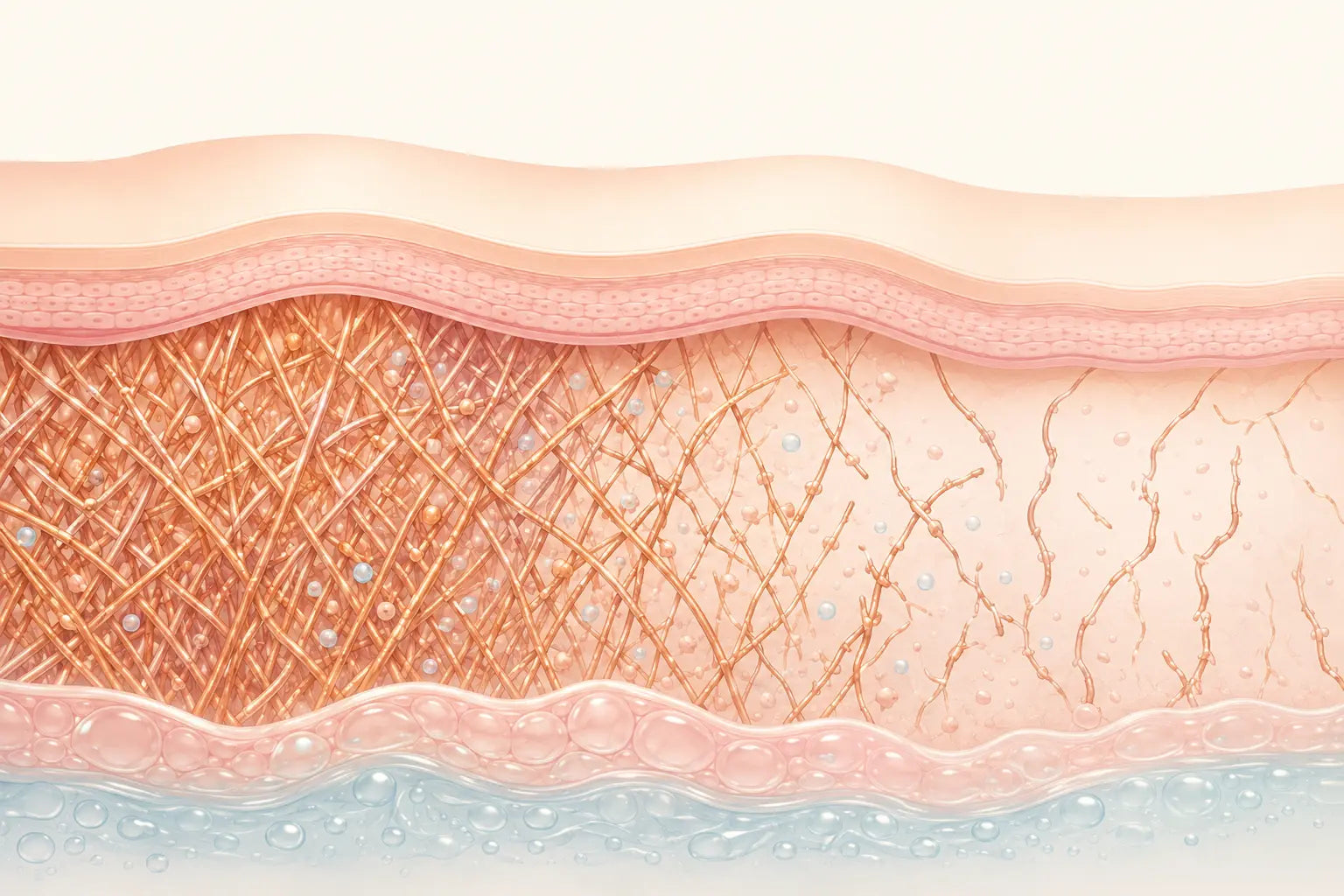
For about thirty years, women have been told the same thing:
"Your skin ages because you're losing collagen. So put more collagen back in."
Every cream. Every serum. Every ad in every magazine.
And the loss is real. Collagen does decline. That part isn't in dispute.
But there's a problem with the conclusion, and it took me an embarrassingly long time to see it.
Collagen is the building material. Something has to tell your skin to use it.
If the instruction isn't being sent, more material on the surface doesn't fix much.
Your Body Already Makes This. It Just Stops.
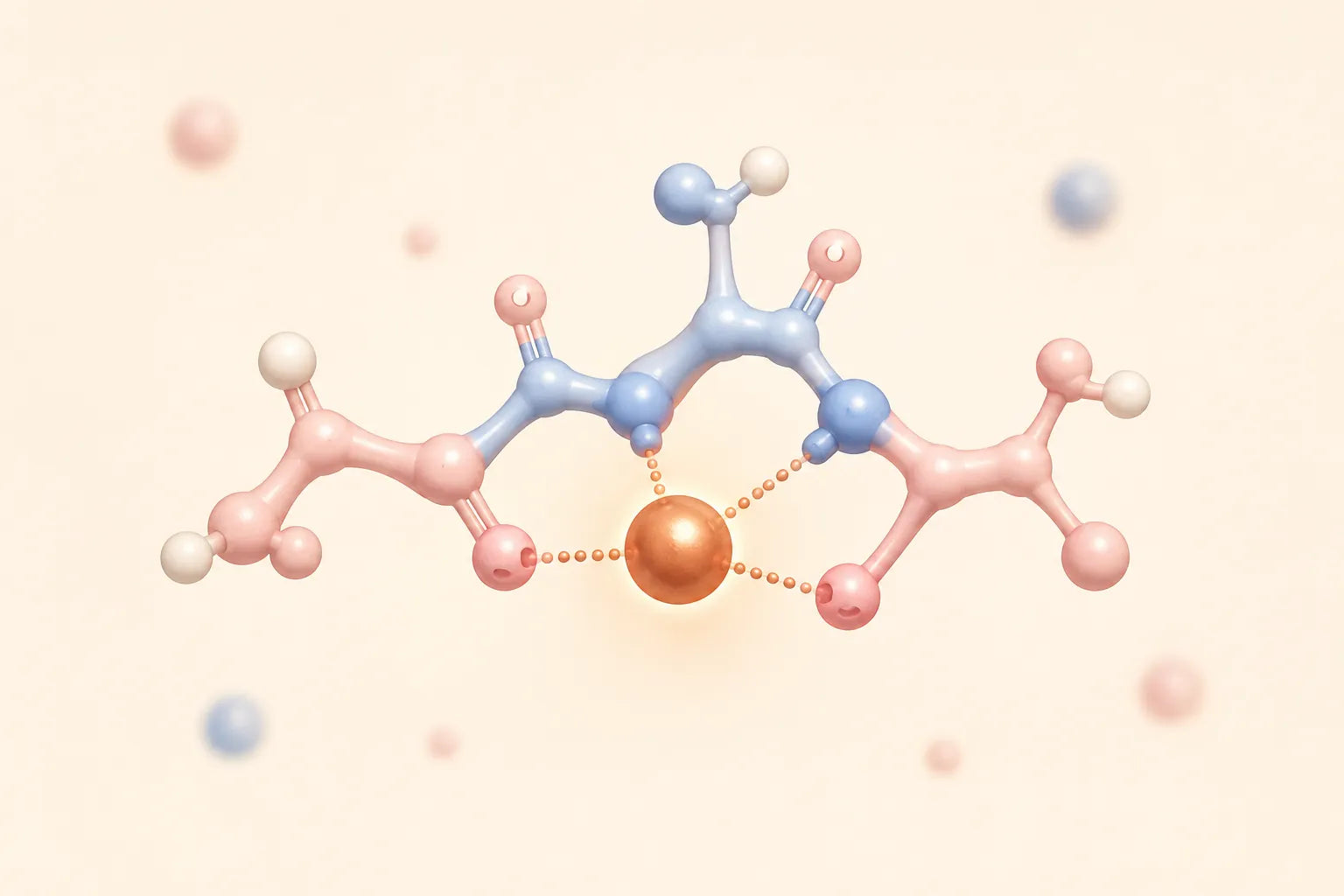
The research I kept coming back to was on a copper peptide called GHK-Cu.
It occurs naturally in human blood plasma. It was first identified in 1973, which genuinely surprised me. This is not a new ingredient, and it is not a marketing invention. It has been studied for five decades.
GHK-Cu is a signal molecule. Published laboratory research has examined its role in skin remodeling, including work on collagen and on the structural components that sit around it.
And the amount your body carries declines substantially as you get older.
That reframed the whole thing for me. You aren't short on material. You're short on the instruction.
I read the original papers, which I would recommend to anyone who wants to check my reasoning rather than take my word for it. They are listed at the bottom of this article.
The 1973 paper is the one that identified the peptide in human plasma. The work through the eighties and nineties looked at what it does in fibroblast culture, including its relationship with collagen and with the structural material that sits around collagen.
I want to be careful with how I say this, because I am a clinician and the distinction matters. That research is laboratory work on the ingredient. It is not a clinical trial of a finished cream, and anyone who tells you otherwise is overselling.
What it establishes is a plausible mechanism with fifty years of investigation behind it. In a category where most ingredients arrive with a press release and a stock photo, that is unusual.
It isn't that your skin forgot how to repair itself. It's that the signal telling it to do that got quieter. Kate McKinley, DNP
There were three things about it that mattered for the patients I was struggling to help.
It doesn't work through irritation, so there's no adjustment period to survive.
It's stable, so it isn't quietly degrading in the bottle the way vitamin C does.
And it's a molecule the body already recognizes, which is a very different proposition from applying something foreign and hoping the skin tolerates it.
Which means it's a routine a person can actually keep doing. Which, as I said, is the part that decides the outcome.
What To Actually Expect, And When
This is where I lose people, and I would rather lose them here than after they have spent money.
Nothing visible happens in week one. What you may notice is that your skin feels less tight after cleansing, and that is a barrier effect, not a structural one.
Weeks two to four are where most women tell me their skin "looks less tired." That is hydration and calm, and it is real, but it is not the thing you bought it for.
The change people actually care about is slower. Skin remodels on a timescale of months, not days. If you are going to see a difference in firmness or texture, it is a six-to-twelve week conversation, and it will show up in a photograph before it shows up in the mirror, because you see your own face every day.
That is precisely why the guarantee runs sixty days rather than fourteen. Fourteen days would not be long enough to know.
60-day money-back guarantee
What I Use, and What I Tell Patients
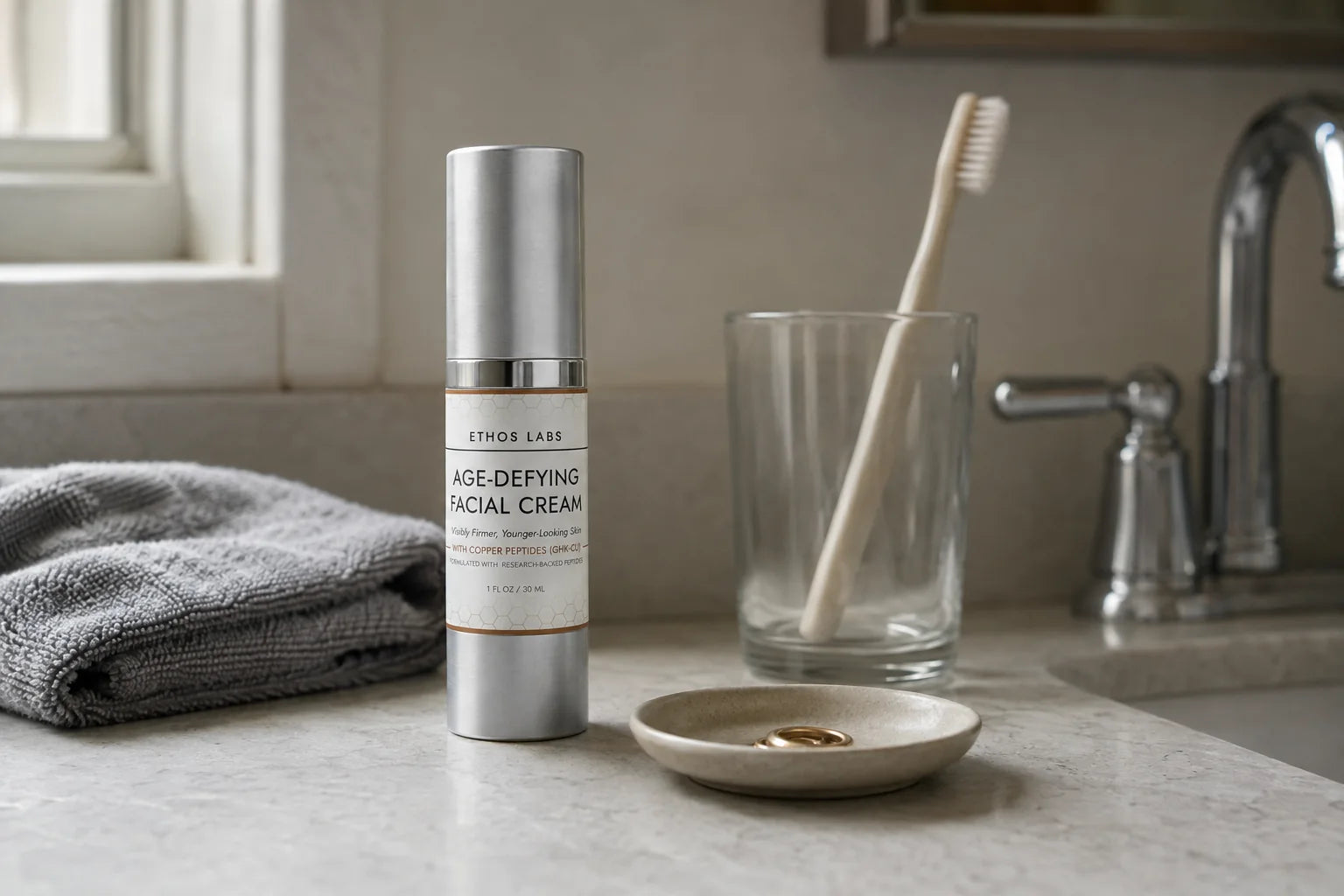
I've used copper peptides in my own routine for years now. I'm 25 years into looking at skin professionally and I have no interest in a twelve-step morning.
What I tell patients is close to what I do myself. Cleanse. One thing that supports the skin. Sunscreen. That's the morning, and it takes about as long as brushing your teeth.
The formula I point people toward now is Ethos Labs Age-Defying Facial Cream, because it's dosed at a concentration that reflects the research rather than a trace amount added so the word "peptide" can appear on the label.
It's fragrance-free. No retinol, no acids. Which is the entire point for the patients who sent me looking in the first place.
It goes on the face, and I tell people they can take it down the neck and chest as well.
Who I Would Not Recommend This For
If a retinoid is working for you and your skin tolerates it, stay on it. You do not have a problem to solve.
If your main concern is deep-set static lines, the ones visible when your face is completely at rest, no topical is going to address those. That is an injectable conversation, and I would rather say so than take your money.
If you have active rosacea, eczema or a diagnosed skin condition, talk to your own clinician before adding anything, including this.
And if you are hoping for a result in two weeks, this is the wrong purchase. Not because it does nothing, but because that is not how skin works, and you will be disappointed on a schedule I can predict.
What Women Are Reporting
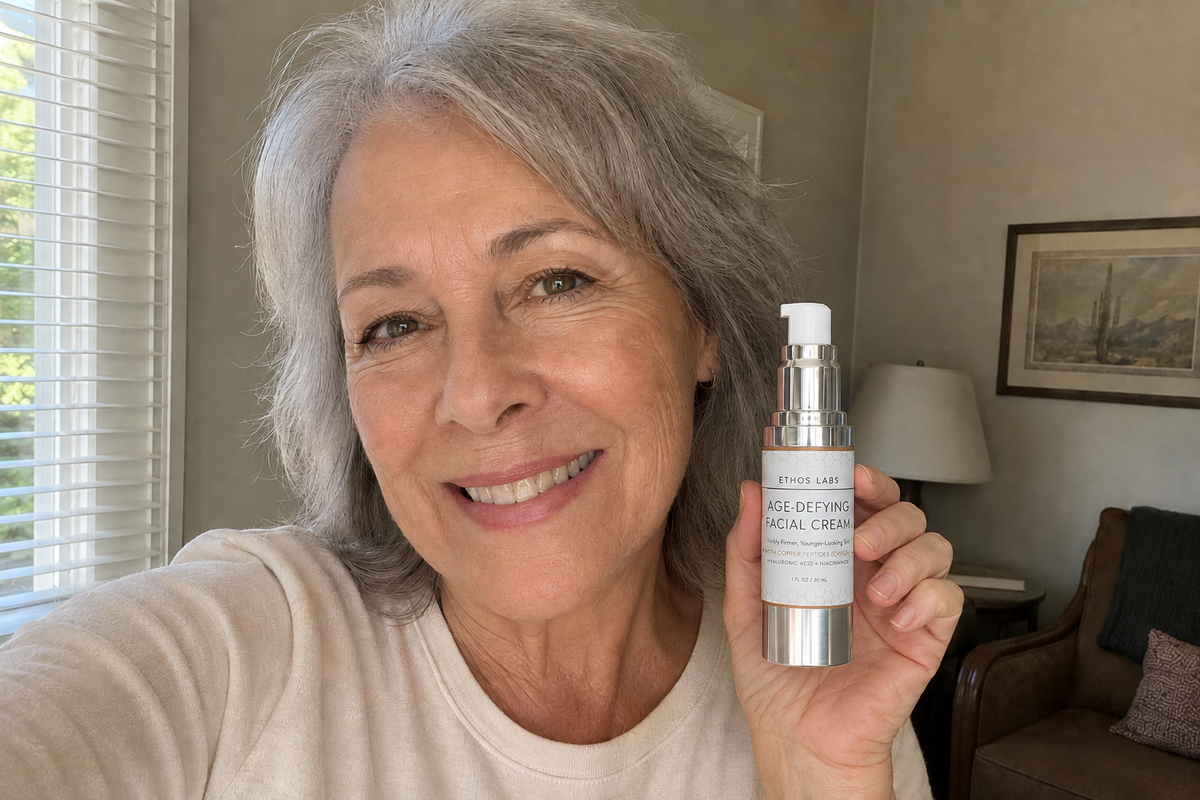
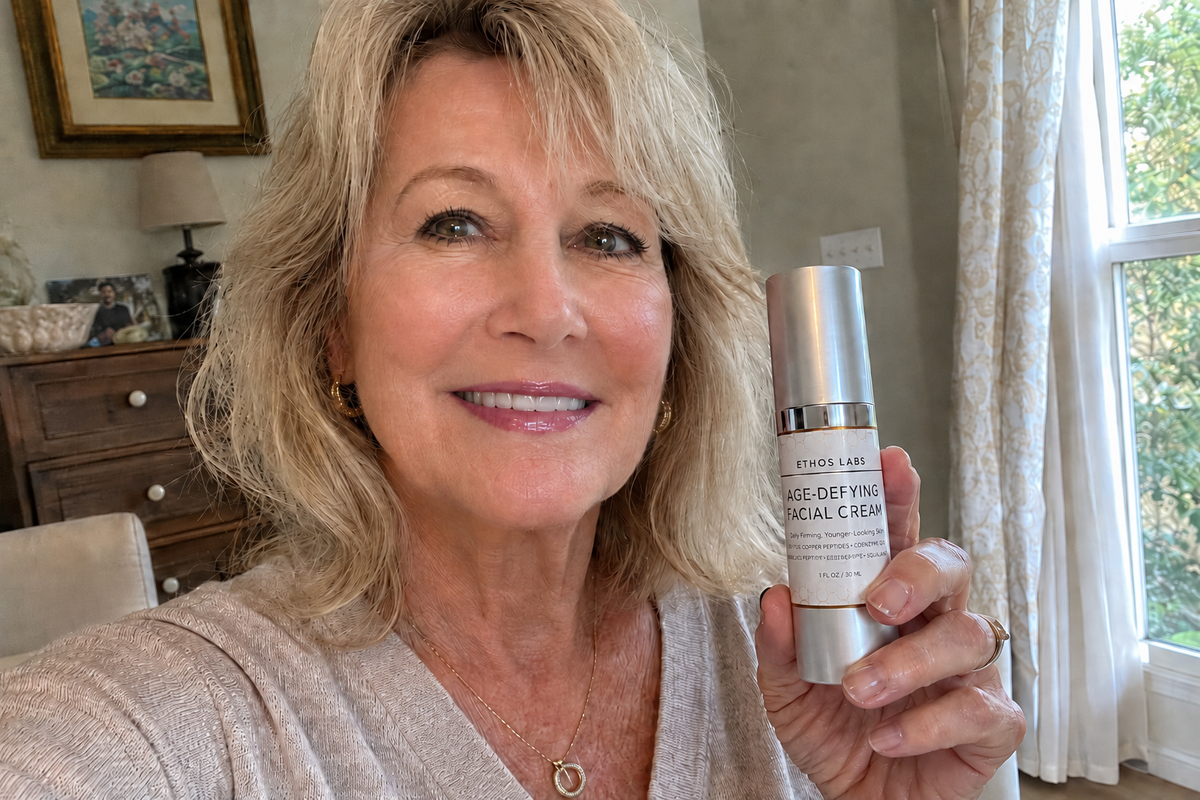
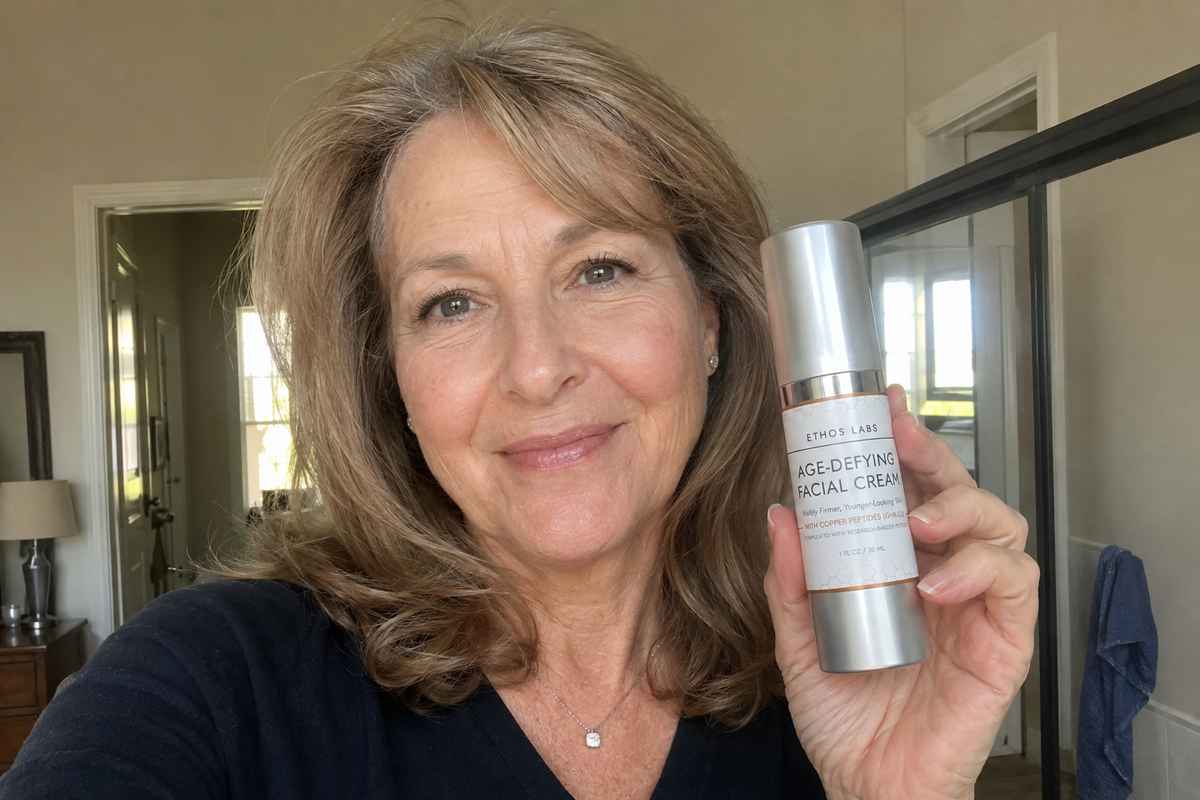
These are from customers who bought the product and wrote in. Photos and full names are used with permission.

Why It Costs $37 a Bottle and Not $150
This is the part that bothered me when I first looked into it.
Copper peptides are not cheap to formulate properly. That's real. But it does not explain a $150 price tag, and it certainly doesn't explain a $300 one.
What explains those is retail margin, department store counters, celebrity endorsements and packaging designed to justify the number on it.
Ethos Labs sells directly, and the product arrives in a plain airless pump bottle. There is no counter, no spokesperson, no box inside a box.
At the 90-day supply it works out to $37 a bottle. That's roughly $1.25 a day for the one step I'd want someone doing anyway.
The Part Worth Knowing Before You Decide
Ethos Labs is a new company, and this is their first production run.
The launch pricing above holds while that run lasts. After it, the price goes up. That isn't a countdown clock invented to rush you, it's just where a new brand starts and where it ends up once it isn't new.
I'd rather tell you that plainly than dress it up.
Launch pricing holds while the first production run lasts
The 60-Day Guarantee

Use the entire bottle. If your skin doesn't look and feel noticeably better, reply to the order email and you're refunded in full. Nothing to ship back.
I want to be careful here, because I'm a clinician and I don't like overpromising.
No cream is going to give you the face you had at 30. Anyone telling you otherwise is selling something, and selling it badly.
What I've seen is more modest and more useful. Skin that stays calm. Skin that holds moisture. Skin belonging to someone who is still using the same routine two years later, which is the only version of a routine that has ever worked.
The Choice, As I See It

Path one is to keep going as you are. Another retinoid you can't tolerate, another vitamin C that goes brown in the drawer, another $150 jar that promised a lot.
If that has been working, genuinely, then keep doing it.
Path two is to try the thing your body already makes, at a price that doesn't require faith, with sixty days to decide whether it did anything.
If you've quit three anti-aging products because your skin couldn't take them, this is the category I'd look at next.
Exactly What To Do Next
If you want to try it, here is the whole process.
Choose the 90-day supply. Not because it is the largest, but because it is the one that matches the timeline above. Thirty days will not tell you anything, and you will end up ordering again anyway.
Use it twice daily, morning and night, on clean skin. Face, neck and chest. Follow with sunscreen in the morning. That is the entire routine.
Take a photograph of your face in daylight before your first application, and another at sixty days, same window, same time of morning. This is the step nearly everyone skips and the only one that gives you an honest answer.
If at sixty days you are not seeing what you hoped, reply to your order email and ask for the refund. There is nothing to send back.
Launch pricing · 60-day money-back guarantee
Current offer
Launch pricing, while the first production run lasts
Subscription starts at $42 a bottle. The 90-day supply is $37 a bottle, down from $89, with free shipping every time.
Every order is covered by a 60-day money-back guarantee. Use the whole bottle. If your skin doesn't look and feel better, reply to your order email and you'll be refunded in full.
60-day money-back guarantee · Free shipping on 2+ bottles · Cancel anytime

I’ve been using the Ethos Age-Defying Facial Cream for almost three weeks. I really like the texture - it feels rich but absorbs quickly and doesn’t leave my face greasy. My skin feels softer, and the area around my eyes looks more refreshed.

I bought this because I wanted to try copper peptides without adding another complicated step to my routine. I use one pump after cleansing, and it leaves my skin feeling comfortable and moisturized. After about a month, my complexion looks brighter and more even.

I’m 66 and have tried a lot of anti-aging creams. This is one of the few that feels moisturizing without sitting heavily on my skin. The fine lines around my mouth seem softer, and my face has a healthier, more rested appearance.

The pump bottle makes it easy to use the same amount every morning and evening. After several weeks, my skin feels smoother and a little firmer, especially around my cheeks and jawline. My sister even asked whether I had changed something in my routine.
References
- Pickart L, Thaler MM. “Tripeptide in human serum which prolongs survival of normal liver cells and stimulates growth in neoplastic liver.” Nature New Biology. 1973;243(124):85–87. PMID: 4349963.
- Schlesinger DH, Pickart L, Thaler MM. “Growth-modulating serum tripeptide is glycyl-histidyl-lysine.” Experientia. 1977;33:324–325. doi:10.1007/BF02002806.
- Pickart L, Freedman JH, Loker WJ, et al. “Growth-modulating plasma tripeptide may function by facilitating copper uptake into cells.” Nature. 1980;288(5792):715–717. doi:10.1038/288715a0.
- Maquart FX, Pickart L, Laurent M, Gillery P, Monboisse JC, Borel JP. “Stimulation of collagen synthesis in fibroblast cultures by the tripeptide-copper complex glycyl-L-histidyl-L-lysine-Cu²⁺.” FEBS Letters. 1988. PMID: 3169264.
- Wegrowski Y, Maquart FX, Borel JP. “Stimulation of sulfated glycosaminoglycan synthesis by the tripeptide-copper complex glycyl-L-histidyl-L-lysine-Cu²⁺.” Life Sciences. 1992. PMID: 1522753.
- Siméon A, Monier F, Emonard H, et al. “The tripeptide-copper complex glycyl-L-histidyl-L-lysine-Cu²⁺ stimulates matrix metalloproteinase-2 expression by fibroblast cultures.” Life Sciences. 2000. PMID: 11045606.
These are laboratory and cell-culture studies on the GHK-Cu ingredient, not clinical trials conducted on Ethos Labs Age-Defying Facial Cream.
This is an advertisement. Kate McKinley, DNP, is a nurse practitioner. She received no compensation from Ethos Labs for this article and holds no financial interest in the company. The views expressed are her own clinical opinion and are not medical advice. Individual results vary.
These statements have not been evaluated by the Food and Drug Administration. This product is not intended to diagnose, treat, cure or prevent any disease.
Comments